31 August 2008

Last Summer in Gothenburg...

“So, what made you decide to go to Gothenburg?” enquired my family. At this point, I could have fabricated an elaborate admiration of a country that has resisted the onslaught of the Euro, and a lifelong fascination with trams and Abba. However, truth prevailed, and I had to admit that it was the result of a slightly inebriated game of “pin the tail on the Ryan Air cheap flights map”, with a little help from Gothenburg native Jens Lekman’s album, Night Falls Over Kortedala (which happens to be at the end of our tram line). But as we cycle serenely across a city basking in midnight silence, the cool air off the Göteborg Älv brushing our faces and the curvaceous reflection of the Operan swimming in our eyes, I’m convinced this is the start of a Scandinavian love affair.

Our hostel, Slottsskogen Vandrarhem, in inauspicious concrete turns out to be a bustling haven of Erasmus students frantically apartment searching, Asian backpackers blogging their experiences on Macbooks in the corner of the friendly book-laden lounge, the heart of the hostel, and noisy German school children (who one morning meet their comeuppance playing knock-a-door down the corridor, waking up an unimpressed 6ft 4 Finnish goth). We make friends with our Parisien roommate, Pauline, who takes us to a tacky but fun club in the heart of the city. We’d read that alcohol in Scandinavia is supposed to be extortionate, but a five hour long Happy “Hour” (about £2.20 a drink) left us sated when the prices jumped back up to 48SEK (about £4.30).

Belying its metropolitan status, the city is closed for business from about 4pm Saturday, and the whole of Sunday, so we borrow bikes free of charge from the hostel (“here’s three sets of keys – if you can make the bikes work, you can take them,” says the trusting girl at reception in perfect English), and meanderingly cycle sunkissed down 12km of clapboard coast to Saltholmen (from the air, the houses look as though they’re made from Port Salut), the ferry port for the Southern Archipelago, a cluster of eight verdant islands not dissimilar to the Isles of Scilly (but where the Scillonian costs close to £100, this ferry was £1.20). To say that we’re amateur cyclists would be far overstating our prowess on the pedals, but the clearly marked cycle paths and sit-up Dutch bikes make for an easy ride, with few mishaps other than chains flying off at high speed. We hop off the boat at peaceful Vrannö, the smallest island, comprising 382 residents (although we’re not sure where they were), a fleet of curious bicycles with huge loading pallets mounted on the front, and a crystal clear, unfettered coastline. We ferry back, and cycle a more direct route home, through Slottsskogen Park, where we see penguins, parrots and pelicans (and other animals that don’t begin with the letter P). Sweden is apparently in the midst of a baby boom, evident by the number of men made all the more handsome by the babies papoosed to their fronts. Whole families cycle together, and the sight of giddy blonde children racing down cobbled streets is affirming – we don’t see an advert for Wii all week.

Everyone had told us how expensive Sweden is, but the only things we pay for are food (the same price as in England), and travel – we spent 100SEK (about £8) on a joint travel card, and after taking 12 trips on it, still £2 remained when we left – beat that, National Rail!). Museums are free as we’re under 25 (not that they ever wanted to check – we were shrugged through without even the promise of ID), and really challenged our preconceptions of Sweden’s national identity (which, to be fair, we had guiltily only gleaned from Eurovision, Ikea, and Swedish pop music).

Our metonymic association of Ikea as representative of Sweden is certainly swayed – the fascinating Röhsska Museet contains a chronological exhibition of furnishings, with every corner questioning what constitutes Swedish design. When the exhibition reaches the seventies, great heed was paid to flat pack design, and the ugly uniform hegemony of homes across the world, with their generic Billy bookcases and Oslo beds. There definitely seemed to be an artistic rebellion against Ikea’s usurping of the homeware market, from Design Torget – a chainstore paradoxically dedicated to showcasing and selling the work of independent Nordic designers – to the beautiful and varying typography throughout the city (Times New Roman and Comic Sans seem unofficially banned from the city’s signage, thankfully).

With its beautiful, stoic university buildings and the romantic village feel of Haga’s cobbled streets, Gothenburg is reminiscent of Oxford and Paris, yet never feels pretentious, or that it’s trying to conform to rose-tinted expectations of how a city should be, it’s casually dismissive of trends, and artlessly welcoming both aesthetically and in spirit. On Monday evening, exhausted after walking miles through the town, we collapse waiting for a tram at Järntorget, and spot a club called Pustervik, advertising a “Pingisklubben” for that evening. A quick Babelfish search on the hostel’s free internet tells us that this is a ping-pong night (and mentions cottages and babies…never trust internet translations!), so we group together with six Germans, a Dutch guy, an Australian, a Lithuanian and an Italian for one of the funniest evenings I’ve ever had. Pingis is a ping-pong table in the middle of the room, with 20 paddles passed around the crowd – everyone takes one hit at a time, going out when you miss or hit the ball off the table, all to the tune of Radiohead, Sigur Ros, and Lykke Li amongst others. As more people go out, the remaining players run doggedly faster and faster around the table, eventually leaving two players to battle it out. We stumble home, to find a new girl asleep in our room, and she’s gone by morning. It reminds me of Lost In Translation, hotel rooms providing the possibility for romantic surprising encounters with people in a similar state of culture shock.

Tuesday takes us and a new Dutch friend around the city’s numerous museums, with highlights including a skateboard exhibition at the Röhsska, and Tomorrow Always Belongs To Us, a showcase of 11 young Nordic artists, whose work ranges from flashing light installations that you’re supposed to watch with your eyes shut, to lifesize gnarled papier maché humanoids twisted under the weight of their self-imposed capitalistic chaos. The museum is an aesthete’s dream, and a brilliant film called Surplus: Terrified Into Consumerism, by Swedish director Erik Gandini catches our eye – set to music by the Gotan Project, and other slippy techno/dubstep beats, he samples and loops excerpts of his interviews with people in the throes of consumerism, lip synching Cuban leader Fidel Castro into saying “I LOVE THIS COMPANY!”, taken from the sloppy mouth of a sweaty, hyped up Microsoft motivational speaker. We’re in stitches, and have to tear ourselves away before the museum shuts.

For our last night in the city, we decide to have a barbeque in the gorgeous Slottsskogen Park, surrounded by babbling ducks and our proud bikes silhouetted against the lake. We promise one another that we will definitely be playing “pin the tail on the Ryan Air flight map” again, for the thrill of the unexpected and the secret internal pride at our intrepid international trailblazing – we feel like pioneers, and leave Scandinavia’s biggest port exporting excited memories as our cargo.

I am in love with Sweden.  

8 August 2008

Mamma Mia


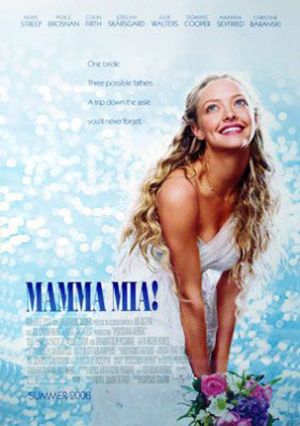
That the two biggest chick flicks of the decade contain subtle allusions to the economic recession should be wholly implausible, but where the Sex and the City film was a climactic exhibition of material excess in the face of the credit crunch, Mamma Mia retorts with a “make do and mend” attitude familiar to the older generation, gently ridiculing its sole socialite and her moisturiser containing “flakes of 24 carat gold and extract of donkey testicle, at $1000 a dollop”. That’s not to say it constitutes cutting edge social commentary by any stretch of the imagination – it’s a film so saccharine and wholesome that the off-key singing of the protagonists is as close at it gets to gritty realism. In case you’re blissfully unaware of the plot, wide-eyed and fatherless Sophie (a spry Amanda Seyfried) is getting married to Sky (Dominic Cooper, who’s about as dreamy and exotic as an Any Dream Will Do contestant), and using covert information gleaned from her mother’s diary, has invited along the three men who could potentially be her father. Cue hilarious conversations at cross purposes and far too much menopausal camel toe for anyone in their right mind to stomach, all to the tune of ABBA’s finest…
There’s a great deal to loathe about this film (not least the soundtrack if you’re not an ABBA fan), from the horrible soft-focus cinematography to the repetitive pratfalls into the glorious Mediterranean, and the pithy script (particularly Pierce Brosnan’s polemic about respecting the rights of the father). The casting is as off-key as the singing – Colin Firth is so embarrassingly unconvincing as a gay man that come the end of the film, the director included an apologetic slow-mo homage to Pride and Prejudice where the abundance of wet-shirted men is in direct inverse proportion to the amount of sex appeal Firth exudes here. It suffers a lack of balance, dedicating little time to the relationship between Sky and Sophie (although we should be grateful for small mercies – their relationship makes that of Troy and Vanessa from High School Musical look transcendent and intense), and its only success at subtly acknowledging Greek mythology (shoehorned in by director Phyllida Lloyd at every opportunity) comes with faintly disturbing shades of the Electra complex that Sophie threatens to develop against Donna pre-wedding.

However (and it’s an extremely begrudged however), Mamma Mia’s greatest success lies in its impeccable knowledge of its target audience – the older generation (or the “BBC crowd” as the film’s marketing manager labelled them)- and part of the film’s indirect charm is to see largely senior audiences one minute acting giddy as school girls (you’ve never heard anything like the screams when the male contingent appear in shiny blue leotards), the next empathising with Donna’s self-confessed technophobia, then cooing with grandmotherly affection as the youth make impassioned decisions. It’s visually addictive HRT, and an older crowd will appreciate a cast that’s not American by majority.
Your average teenager understands that singing in front of people is a mortifying pastime reserved for delusional X Factor contestants, public displays of affection are for saps, and that you should never trust a girl who says her mother is her best friend - but for the older generation, the sentimental decency of the plot recalls a time when entertainment came from making the best of what you had, and not compensating for emotional voids with capricious capitalism. It’s good clean fun, with old favourite Julie Walters delivering the film’s sharpest and most risqué line – when discussing Donna’s sex life in a cringeworthy scene starring a power drill (no prizes for interpreting that metaphor), she upholds that “it’s just more plumbing to be maintained”, and often steals the show with her wired delivery and unabashed willingness to send herself up in the stickiest of situations.

Only people who bandy about the word “trendy” could ever see this film as cool, but happily, the film never pretends to be anything of the sort. It’s a self-indulgent and undignified farce, but the original ingenuity of the ABBA-led narrative still shines through, despite the gaping plot error (the oldies reminisce about flower power and the good old days, making Pierce Brosnan a latent hippy, or Sophie the world’s youngest-looking 39 year old). Where Sex and the City failed to emphasise the so-called empowerment of feminist, liberated modern women, Mamma Mia thrives by discouraging subordination to a life of domesticity and emotional materialism, promoting independence, and self-discovery. Which, when you think about it, is far cooler than desperately chasing romance and $250 cushions…

13 June 2008

Sunburned Hand of the Man & The Rosemarie Band @ Miss Peapods, 10.06.08

With Miss Peapods still reeling from Monotonix's sweat-drenched assault a few weeks ago, Sunburned Hand of the Man's second gig in Penryn initially looked to be a far less life-threatening affair. Elegant Falmouthians The Rosemarie Band complemented Cluster-esque shades of Krautrock with a Celtic chirruping flute, and a calmly liturgical rhythm akin to the post-rock instrumentation of Do Make Say Think. Their first song an incongruous vocal number, the set improved incrementally as words were cast aside, and a burring guitar met with the sun setting over the Fal for a demure crescendo. Resonant with promise, The Rosemarie Band could follow in Thistletown's footsteps and become Cornwall's brightest slow-burners of 2008.

Appearing shortly after to a crowd buoyed by Peapods' potent organic cider, Sunburned Hand of the Man precipitated potential danger in their set when they strewed shock-absorbing foil sheets across the stage; it wasn't immediately obvious whether these were intended for the benefit of a venue bruised by Monotonix, or audience members of a nervous disposition. Either way, songs ranging from primal lycanthropic yelps to more cosmic percussive drones passed by without making much of a lasting musical impression - most memories of the evening will recall freakish totem masks looming through alien euphonies rather than any mind-blowing brilliance. However, as with each and every gig put on by Lono, it marked a thoroughly memorable night better than most, and to echo the thoughts of many, it's a shame that the next date in Lono's calendar isn't until August.

15 February 2008

MV&EE @ Miss Peapods, 11.02.08

After a run of quietly spectacular gigs in 2007 (Jack Rose, Jeffrey Lewis et al), Falmouth-based Lono Records' latest coup (and their list of forthcoming dates) only added to the unanimity that they're the saviours of truly alternative music in Cornwall. Preceeded by the yodelling, herb-referencing Simon Drinkwater, and Andrew Hockey's off-kilter pop-psych jams, MV & EE delighted the largely bearded crowd (the male contingent at least) with sprawling, 20-minute renditions of songs from their exponentially expanding back catalogue (anything written about the band will undoubtedly feature the word "prolific").
Both the more subtle, woody songs from recent album, "Gettin' Gone", and its crunchy Americana-tinged numbers were similarly burnt by an intriguing conversational drone and lysergic pounding rhythm, which, at times, could rightly have been labelled self-indulgent, but under the head-nodding influence of Miss Peapod's potent organic cider, a harsh stop to a song might have seemed unfair, and amputative. However, it'd be unrealistic to state that every 20-minute opus was a pleasure to hear - whilst the set seemed impressively built around intuition for the other musicians, it would perhaps have been more satisfying to hear them draw from further into their past recordings, with a little more tonal texture.

31 January 2008

Tegan et Sara - The Con

Quand son dernier titre est devenu populaire seulement parce que les White Stripes ont enregistré un des chansons (le fantastique "Walking With a Ghost"), c'est comprendable qu'on serait amer. Naturellement, ce n'est pas probablement la raison du changement de la tonalité, mais il est indéniable que les jumeaux canadiens cinquième titre est lyriquement plus sobre, et moins "pop" par convention que son prédécesseur. 26 ne nous semble pas vieux, mais les rêveries sur l'âge brillent par le disque le plus musicalement expérimental de T&S - sur "Like O, Like H", et "Nineteen", relaté par le lyrique typiquement idiosyncratique - "je vous ai senti dans des mes jambes, avant que je vous aie jamais rencontré". Des quelques moments optimistes, "Back In Your Head" discute l'engagement très ouvrir - "je ne suis pas infidèle mais je vaguerai", s'ajoutant au type d'honnêteté rare et beau qui est sûre de permettre ce titre de parler pour lui-même, sans aide des amis célèbres.

29 January 2008

Red Stripe Music Awards: Falmouth Heat

So it’s awards season again, and with the NME Awards making the Brits look more alternative than Britney doing gabba, it’s up to Red Stripe to revolutionise recognising unsigned talent (despite ignoring last year’s finalists, our resplendent Rosie and the Goldbug, in favour of another identikit guitar band). Kicking off the first of Cornwall’s three heats is The UPS, four skinny young chaps in full uniform (Topman’s Winter collection) with a nice line in explosive drumming. However, they let themselves down with the other members’ failure to concentrate on the job in hand, instead remembering to don one’s all-important white Wayfarers mid-set. All stuttering guitar and drums, most of their repertoire bombed with weak verses, and generic football terrace “oh-oh-oh-ing” about that much-mooted cliché, “reality”.

Less on-trend of disposition, Nervosa take to the stage, looking promisingly like a supergroup made up of Lemmy Motorhead, one of Arcade Fire and Glass Shark. However, they disappoint with their rankling, dated mid-90s rock sound, often evoking the hairy soul of Nickelback. To give credit where it’s due, they were significantly tighter than The UPS, but in no way comparable to their stage successor.

“Now for some fopp rock,” purrs the dandyish Andrew Bate, with the first sign of any charisma or real presence of the evening. Since first appearing two years ago, Andrew has developed remarkably, crafting an enigmatic, seemingly innocent onstage persona, and lending his songs a sweeping tonal grace akin to Radiohead’s acoustic moments. The rhythm section led by his waltzing eyebrows, ‘Trust’ writes the evening’s most thoughtful lyrics (although the competition’s not hard when up against nonsensical trend-chasing tales of reality).

Unfortunately, the embers of Andrew’s set are soon stomped on by the boisterous, hardcore Disco Pip, whose set was hampered by the presence of a great big Gaye albatross, and their every song ending in a crashing sonic wall of oblivion. However final song, “Even the Brake” was undeniably satisfying, all synthetic sirens and visceral yowls, erasing all memory of the one-chord wonders they played previously.

It’s hard not to take the bait in Tom Pitts’ opening statement – “Hello, I’m The Pitts” - especially when his first number sounds like a male Kate Nash with terminal screaming PMT, followed by an appalling cover of Pixies’ “Where Is My Mind?”, which, like the rest of his set, attempts to be ramshackle and twee, but just comes off as unadulterated tosh. There might have been a certain charm lingering in his profusely perspiring nerves, but certainly not the addictive allure of the Moldy Peaches, Bill Bailey, or any other comedy acoustic troubadours.

Thank goodness then, for My Elvis Blackout, who despite a year away from the scene, are razor sharp of wit and shirts, without a dated note in their ‘50s surf-rock heavy set. Their thumping, swaggering sonic beast would leave the Cloverfield monster pleading for mercy, and they’re the only band tonight to whip the crowd into mid-song whoops of joy. Old favourite “Elsie Elsie” rears its head, steaming with pheromones and the scent of sticky young lust. Set-closer “Back In The Food Chain”, with its bullish feudal lyrics, sent a message to all the young pretenders to their throne, but it’s not one to be printed here...

3 November 2007

Stars of Hope Charity Gig at Princess Pavillions

A group of local teenagers are organising a charity concert in Falmouth to raise funds for Kenyan children. The gig will take place in Princess Pavilions on 23rd November, in order to raise funds for the Cornwall-based charity, Stars of Hope.

Performing will be popular local bands such as Rosie and the Goldbug, Ammunition, and The Reels, in addition to young newcomers Harry and the Hermits, and the alternative girl band, Shagrat.

“We started off as a bit of a joke, now we’re playing at Princess Pavilions! It seems farfetched, but now it’s dawned on us properly, we’re scared but really proud!” said Georgia Gendall (16), of Shagrat. “I’m very impressed that a fair bit of the success is down to some teenagers.”

Rosie Henderson, Emily Knuckey, Tim Petherick and Rachel McKie (all of Truro College or Truro High School) are in charge of the night, which succeeds a similar, extremely successful gig at Truro High School.

“At our first gig, we had seven young local bands playing, which we discovered through friends and the internet. We raised over £850, and instead of donating it straight to the charity, we asked if we could invest it in another, bigger gig, which they allowed,” said band-organiser Emily Knuckey (16). “This time, we’re aiming to raise at least £2000, hopefully nearer £3000!”

Second on the bill is My Elvis Blackout, who have enjoyed a stellar 2007: “We’ve done a few charity do’s recently because we’re extremely altruistic, well-adjusted, modern individuals. We’re also doing this one because we don’t play in the mother land very often.”

Despite the young age of the organisers, they appear to be coping well with the demands of such a huge task, as recognised by their performers. Rosie Vanier, frontwoman of headliners, Rosie and the Goldbug, said: “They are doing an amazing job of getting everyone together! We are looking forward to the show and seeing all the other bands – it will be a great night, and a good opportunity to get together and have a few drinks!

“We were not aware of the charity before, so it just goes to show that events like this are great for raising awareness and funds. It sounds like a great cause, and we are delighted to be playing.”

Georgia of Shagrat also praised the organisers for their inclusion of fledgling bands: “I think that Cornwall should give new bands more opportunities like this, because it’s something to strive for. This is huge for us!”

Stars of Hope is a Cornwall-based, non-profit organisation working locally with young people. Proceeds go to their centre in Kenya, which supports vulnerable children in poverty-stricken countries, and aims to help local people to help themselves. Their latest project is in Bali, to raise awareness and care for disabled children.

Tickets are £8 on the door, or £6 in advance, available from Princess Pavilions on 01326 211222. Apart from the small percentage of money which the Pavilions receives for tickets sold from their box office, every penny goes to charity.

26 October 2007

Cuckoo Flies the Nest

The people behind a recently-closed Truro bar have relaunched the brand as an alternative club night.


Cuckoo, formerly of Old Bridge Street, was closed in September due to the proprietor's ill health. It is now manifesting itself as 'Club Cuckoo', which kicked off in Truro's Bar 200 on 20th October, and will move around the clubs of the area. Liam Jolly was the bar's live music promoter, who, with his company 'Suave', will be journeying the night around Cornwall:

"At Cuckoo we created a very identifiable brand, so now we can take that to those who couldn't make it to Truro due to Cornwall's awful public transport! We wanted a friendly, non-cliquey environment in which to listen to the best in alternative music at loud volume.

"We had great feedback from the first night, although it was quite stressful as we coincided with the rugby world cup final."

A customer from the first night seemed to agree: "I'm so glad that Cuckoo hasn't gone completely - we need this kind of thing to cater for people who don't like 5000 beat-per-minute dance rubbish, which is the only taste that other clubs in the area seem to cater for. The mixture of live music and DJs is obviously a winner, and going by their track record with getting bigger names to play, I for one am excited."

During its time at a permanent location, Cuckoo was renowned for supporting bands from Cornwall and further afield, with over 80 bands performing on their stage in the five months they were open. Many of these nights were filled to capacity. Live music is also a feature of the new night, which will take place across the county.

"We're opening in Falmouth on 12th November in the upstairs of MI Bar. We have some great bands lined up for it, and with the student population in and around Falmouth at an all-time high, it should be great. It's a very arty night, so where better to do it than Falmouth? There will also be a one-off night in Redruth soon," said Mr Jolly.
Under the proprietors of Kazbah, the Barley Sheaf became Cuckoo in April, and was suceeded by The Riverside, a new gastropub, in September.

The next night will take place at Bar 200 on 27th October, featuring A Day At The Movies, King Furnace, and The Venton Gimps, in addition to resident DJs The Earls of Suave (aka Liam Jolly and Frank Gane). Entry is £3 and strictly 18+.

25 October 2007

Harmonia - Live 1974

Comprising members of Krautrock superstars Neu!, Cluster, and, at times, Brian Eno, Harmonia helped to redefine and rebel against the cultural wasteland of a Germany in the process of renewed self-discovery. On ‘Live 1974’, they’ve taken the moody mechanical side of the genre, lacing it with determined soaring intricacies and synths which inspired bands from Battles to Radiohead, potentially making Harmonia one of the most important supergroups you’ve probably never heard of.

9/10


(as printed in NME 17.10.07)

Listen to: Laura Gibson

If alternative and challenging culture needed a mecca, one need look no further than Portland. From the legacy of Riot Grrl, Matt Groening's take on American suburbia and Chuck Palahniuk's defining work springs Laura Gibson, whose waltz-imbued 'Nightwatch' brings to mind staticky super-8 films of fun in snowy parks and coffee by dappled light. The four tracks on her Myspace challenge Bright Eyes' 'I'm Wide Awake, It's Morning' for the crown of exquisitely-interpreted acoustic Americana, and her voice laps with natural nonchalance such that Kate Nash only wishes she could accomplish. The sepia fanfare on 'Come By Storm' wouldn't sounds incongruous on a Sufjan Stevens album, nor Nina Nastasia. Luckily for us, she's playing in London in December, so there's no need to buy a ticket to Portland for the pilgrimage.